Pixel and Projection Mapping
Experience Design Study · Spatial Media
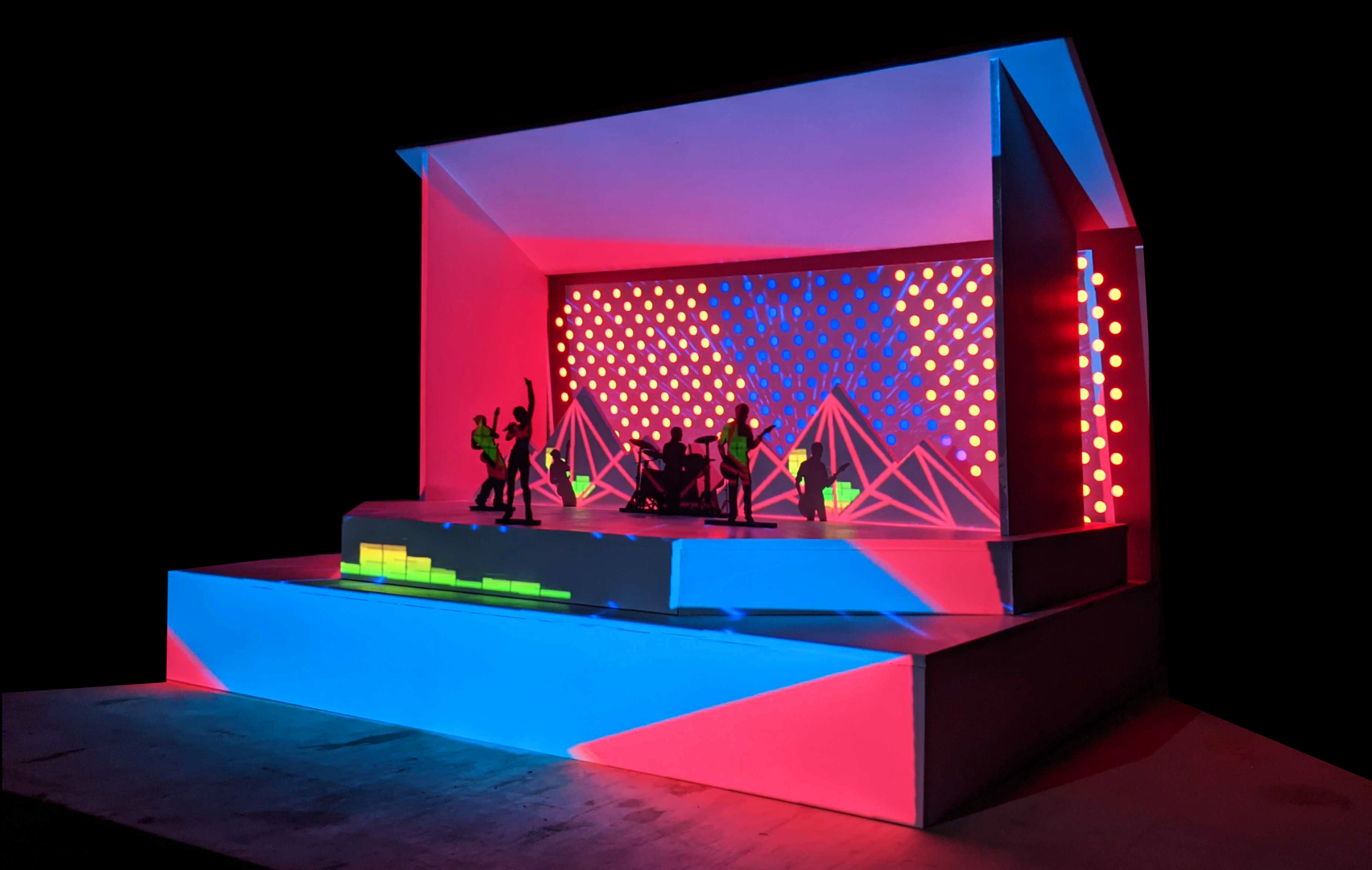
This prototype explores how synchronized audio, projection, and pixel-mapped lighting can activate physical space and shape audience perception. Designed as a small-scale stage environment, the study demonstrates how real-time media systems can be composed to transform static architecture into responsive, immersive experiences.
The project focuses on spatial alignment, media behavior, and system integration as early-stage tools for experience design—testing how light, sound, and motion work together to guide attention and create atmosphere.
Tools & Methods:
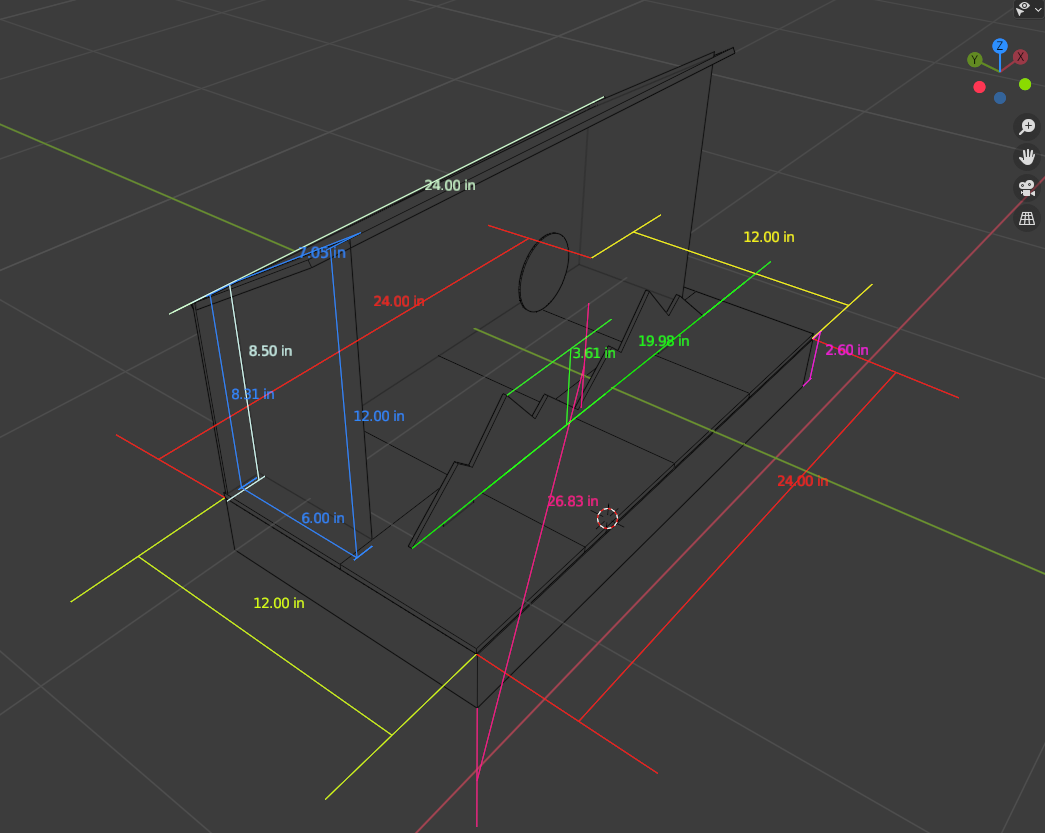
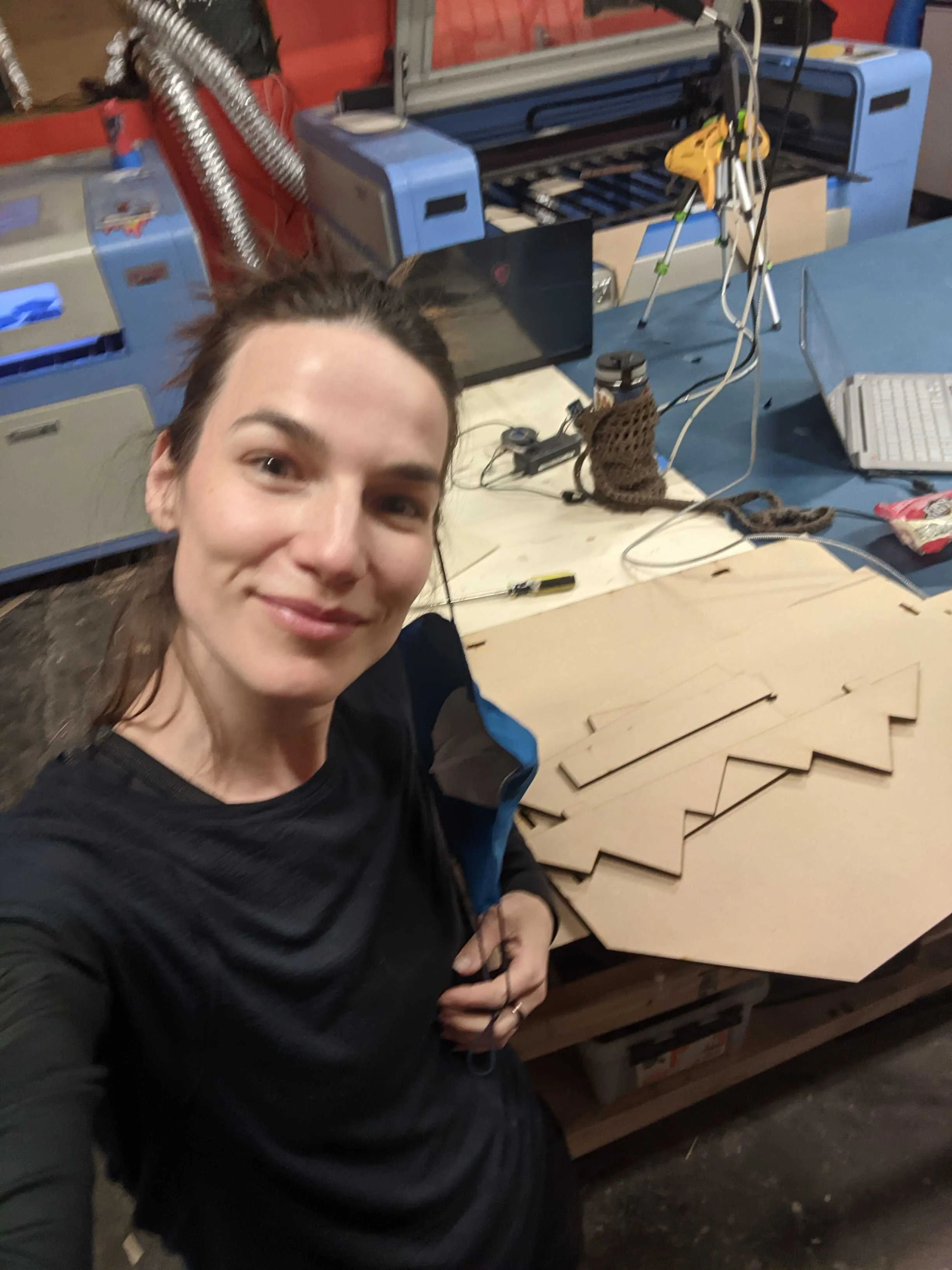
Concept design and fabrication using Adobe Illustrator, Blender, and LightBurn; pixel and projection mapping with MadMapper; real-time visual programming using Magic.

Concept art, ideation process and pitch.